
The Biden Administration recently announced a bold initiative to confront climate change aimed at advancing green jobs for the U.S.
Trout Headwaters is proud to have been a part of battling climate change- early adopters in Green Industry and Green Business – since before any of these terms were common. For nearly 25 years now, the firm has created ecological restoration on streams, wetlands and habitats with public benefit using private capital.
Environmental banking projects are examples of just such opportunities and recent changes in requirements for consistency across all U.S. Army Corps Districts for 404 Mitigation Banks provide yet another driver for creating lasting environmental restoration for landowners, and ultimately significant carbon sequestration.
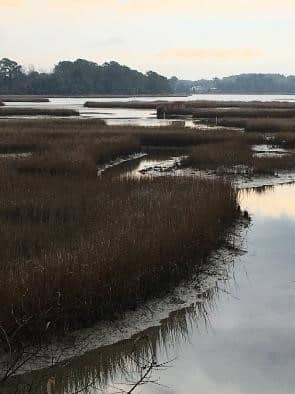
Private business and private investments driving environmental banking restore, protect and preserve streams, wetlands and other habitats. And, while the ecological services of these natural resources are well-recognized (ie: water storage, water filtration, flood prevention, and vital aquatic habitat), there is another important, sometimes overlooked value – these restored resources have potent carbon storage potential.
According to a study by renowned wetlands expert Bill Mitsch, of Florida Gulf Coast University, two 15-year-old constructed marshes in Ohio accumulated soil carbon at an average annual rate of 2150 pounds per acre—or just over one ton of carbon per acre per year. The rate was 70% faster than a natural, “control” wetland in the area and 26% faster than the two were adding soil carbon five years ago. And by year 15, each wetland had a soil carbon pool of more than 30,000 pounds per acre, an amount equaling or exceeding the carbon stored by forests and farmlands.
What this suggests, Mitsch says, is that researchers and land managers shouldn’t ignore restored or constructed wetlands as they look for places to store, or “sequester,” carbon long-term. When such wetland areas are discussed in agricultural circles, it’s almost always in the context of water quality. “So, what I’m saying is: let’s add carbon to the list,” Mitsch said.
“Trout Headwaters is happy to have created lasting wetland restoration and carbon sequestration on so many properties across the U.S. over the past more than two decades. Our work to restore native species, restore riparian forests, increase biodiversity continues daily to be incredibly rewarding. What a privilege it is to able to partner with like-minded firms and individuals to create economic and ecological values – values in many cases that will live on to the future generations,” said company CEO Michael Sprague.


