
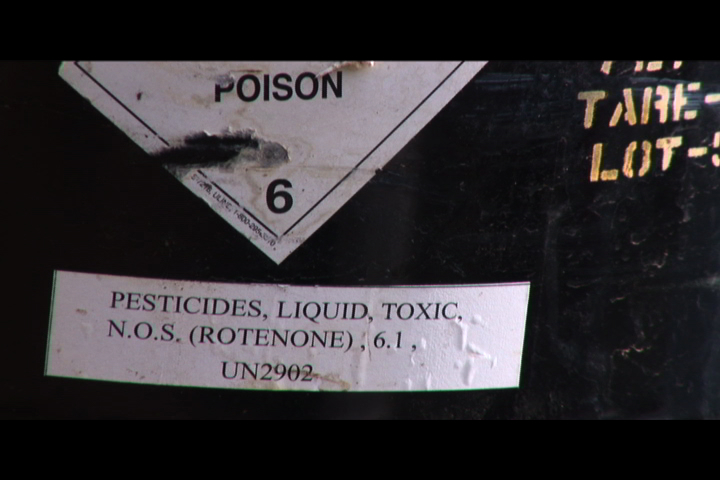
Rotenone is a common agricultural pesticide, but is also the chemical of choice used in river poisoning. Fish and wildlife agencies commonly use rotenone to rid streams and rivers of unwanted fish species in favor of native game fish species.
The Journal of the American Medical Association continues to report apparent link between the use of rotenone and an increased risk of developing Parkinson’s disease, citing among others, a study by the National Institute of Environmental Sciences and the Parkinson’s Institute and Clinical Center, a nonprofit research institute in Sunnyvale, Calif. More at http://jama.ama-assn.org/content/305/12/1188.1.extract
Montana, and other states in the West have programs underway dubbed “native fish restoration” or “non-native fish eradication” that routinely use rotenone to remove all the fish in a portion of a stream, and then re-introduce fish of choice, usually a so-called ‘native’ trout raised in a hatchery.
And while this should not be news, a Montana doctor captured the problem with fish poisoning in a letter to the editor that ran in several newspapers including the Billings Gazette, where he laments not only the use of rotenone, but the use of potassium permanganate as an antidote to rotenone. Dr. Vernon Grove pleaded in his letter, and we agree, “Please share your concerns with our governor, legislators, fish and wildlife departments, tourism and other agencies concerned with wildlife, nature, fishing, hunting and human health.”


