
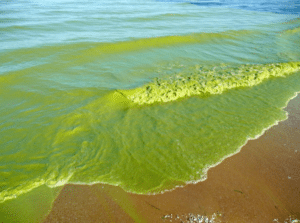
 Lake Erie’s western basin had another substantial algae bloom this summer. It’s no surprise then that a recently-released report concluded that Ohio, Michigan, and Ontario are all falling short at reducing phosphorous levels entering the lake.
The two states and the Canadian province have an agreement to reduce phosphorus discharges by 40 percent between 2015 and 2025 but Gail Hesse, director of the National Wildlife Federation’s Great Lakes water program, contends the states and the province have failed to offer feasible solutions to decrease phosphorus levels, or the size of the annual algal blooms.
Hesse added that Ohio, Michigan and Ontario’s “draft plans released to date include many useful initiatives, but all fall far short of providing any assurance that the proposed actions add up to meeting the 40 percent reduction target.” She added, ”The plans read like a grocery list without a recipe”.
The “Rescuing Lake Erie” report issued by the Alliance for the Great Lakes however makes multiple recommendations to achieve significant phosphorus reduction in western Lake Erie.
Read more at: http://www.cleveland.com/metro/index.ssf/2017/10/lake_erie_algal_bloom_cleanup_1.html?wpisrc=nl_energy202&wpmm=1


