
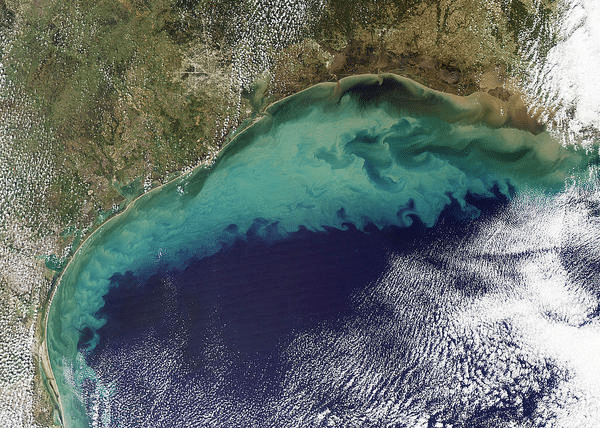
Summer after summer the size of the Gulf Dead Zone – the oxygen-depleted area of the Gulf of Mexico is compared to the size of a state. This year, it’s predicted to be the size of Massachusetts.
Heavy spring flooding in the Midwest flush agricultural chemicals from fields down river to the Gulf. Heavy loads of nitrogen and phosphorous promote algal blooms, which deplete the affected areas of the gulf of oxygen in warm summer months.
According to the forecast by the U.S. National Oceanic and Atmospheric Administration, the Gulf dead zone this summer will be about 7,829 square miles.
Larry McKinney is senior director of the Harte Research Institute for Gulf of Mexico Studies at Texas A&M University Corpus Christi told Texas Public Radio the problem begins upstream along the Mississippi River. Heavy spring rainfall washes nitrogen-rich fertilizer from Midwest farms, which ends up feeding algae. Farms that grow corn for ethanol, for example, use more fertilizer in an effort to meet the market’s demand.
“The Mississippi River drains about 40% of the country,” McKinney says. “So, anything that happens in the heartland of the U.S affects us.”
McKinney
says this can ultimately affect the food chain along the Gulf Coast and the $16
billion dollar gulf fishing industry.
Trout Headwaters has
long been an advocate for healthy functioning floodplains that filter and slow
floodwaters. Wide, lush floodplains and riparian areas provide ecological
services that protect property and water quality during flood events.
Read more: https://www.tpr.org/post/year-s-dead-zone-gulf-could-be-one-largest-record
You might also like: Restoring Nature’s Water Filter: How Streamside Vegetation Can Save the Gulf of Mexico


